
Craniosacral Therapy for Tongue Tie & Breastfeeding
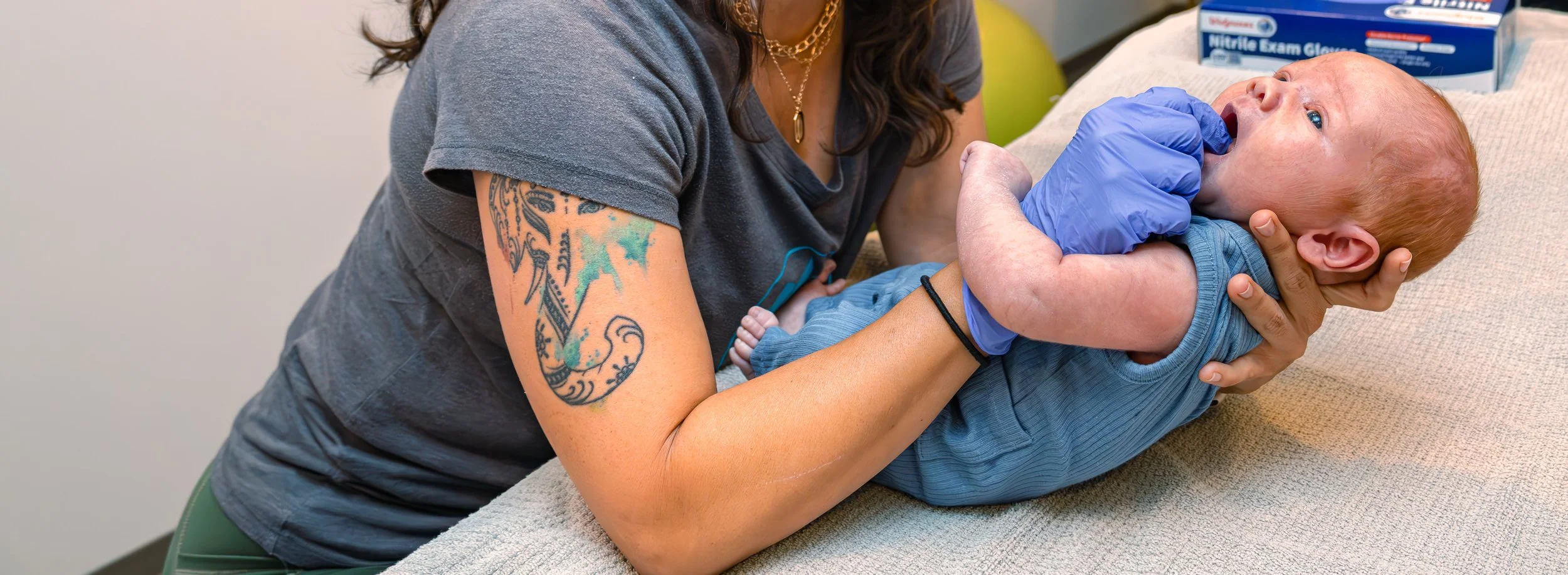
If you’re in the Kansas City area and have landed here, chances are feeding your baby hasn’t been as easy as you expected.
Maybe nursing hurts.
Maybe your baby clicks while feeding, pops off constantly, or just never seems satisfied.
Maybe someone has mentioned a tongue tie, or maybe you just have a feeling something isn’t quite working the way it should.
I see families in this exact spot all the time.
Craniosacral therapy can be a really helpful piece of the puzzle for babies who are struggling with breastfeeding, especially when tension in the body is part of the picture.
What is a Tongue Tie, anyway!?
A tongue tie (called ankyloglossia) happens when the small piece of tissue under the tongue is tight or restrictive, limiting how the tongue can move.
For breastfeeding to work well, babies need their tongues to do two main things:
• Lift toward the roof of the mouth
• Extend forward to create a seal around the breast
When that movement is limited, feeding can become frustrating for both baby and mom.
Common signs families notice include:
Shallow or painful latch
Clicking while nursing
Baby slipping off the breast
Slow weight gain
Gassiness or reflux
Baby seeming frustrated or fussy during feeds
Cracked or sore nipples for mom
Not every baby with these symptoms has a tongue tie — but they can definitely point us toward looking a little deeper.
Why the Tongue Isn’t the Whole Story
Even though the name tongue tie focuses on the tongue, the reality is that feeding involves the whole body.
Babies with feeding challenges often have tension through the:
jaw
neck
shoulders
diaphragm
and sometimes all the way down through the spine and pelvis
Sometimes this tension started in the womb.
Sometimes it developed during birth.
And sometimes it builds because baby is working extra hard to feed.
So while a frenulum release can allow the tongue to move more freely, it doesn’t always address the underlying body tension that was there before.
That’s where craniosacral therapy can help.
How Craniosacral Therapy Helps Babies
Craniosacral therapy (CST) is a very gentle form of bodywork that focuses on the nervous system and the connective tissue that runs throughout the body.
The touch used is incredibly light — about the pressure you’d use to test the ripeness of a tomato.
During a session I look for areas where baby’s body may be holding tension and help those areas soften and release.
For babies with feeding challenges, this often includes the:
jaw
tongue and mouth
neck
diaphragm
spine and sacrum
When those areas begin to relax and move more freely, babies often find it easier to coordinate the movements needed for feeding.
Signs Your Baby May Benefit from Craniosacral Therapy
Sometimes the first sign that something isn’t quite right is simply that feeding feels harder than it should.
Babies who are dealing with tension in their bodies often show little clues that things aren’t moving as easily as they could.
Parents commonly seek craniosacral therapy when they notice things like:
• Difficulty latching or staying latched
• Clicking sounds while nursing
• A baby who seems frustrated or fussy during feeds
• Frequent spit up, reflux, or gassiness
• Preferring to nurse on one side only
• Head turning or tilting to one side
• Arching the back or stiffening the body
• Trouble settling or sleeping
• A baby who always seems tense or uncomfortable
Not every baby with these symptoms has a tongue tie, and not every baby needs bodywork.
But these patterns can sometimes point to tension in the nervous system or connective tissue that may benefit from gentle support.
Craniosacral therapy works by helping the body release that tension so babies can move, feed, and settle more comfortably.
Craniosacral Therapy for Torticollis and Flat Spots
Many babies who struggle with tongue ties also develop torticollis, which is a tendency to keep the head turned or tilted to one side.
This often happens because babies naturally look for the position that feels easiest in their bodies.
Over time this preference can lead to:
• difficulty nursing on one side
• limited neck mobility
• a flat spot forming on the head
• increased tension through the neck and shoulders
Craniosacral therapy helps by gently addressing the tension patterns that may be pulling the body off balance.
By working with the neck, spine, jaw, and cranial bones, CST can help babies find more symmetry and freedom of movement, which often supports both feeding and development.
As mobility improves, babies are better able to turn their heads, switch sides while nursing, and explore movement in a more balanced way.
What a Baby Craniosacral Session Looks Like
One of my favorite things about working with babies is how gentle and flexible the sessions are.
Your baby doesn’t have to lie still on a table.
They can be in your arms, on a blanket, or even breastfeeding during the session.
Many babies relax so much they fall asleep. Others stay awake and curious the whole time.
This work is completely baby-led. If a baby needs to move, eat, cry, or take a break — we follow their lead.
Before or After a Tongue Tie Release
Craniosacral therapy can be helpful:
• before a release to reduce tension in the body
• after a release to help babies adapt to their new range of motion
• or sometimes as part of exploring whether a release is even necessary
In many cases, the best outcomes happen when families work with a team — often including a lactation consultant (IBCLC), pediatric dentist, and bodyworker.
What Parents Often Notice After Sessions
Every baby is different, but families commonly report things like:
Baby staying latched longer
A deeper or more comfortable latch
Less clicking while feeding
Baby seeming more relaxed overall
Improved head and neck mobility
Better sleep
Less fussiness or tension in the body
Sometimes changes happen quickly. Other times the body needs a little more time and a few sessions to unwind patterns that have been there since birth.
After a Session
After treatment, some babies sleep more than usual for a day or two. Others simply seem calmer or feed more efficiently.
Parents often notice small but meaningful shifts — like better head movement, longer stretches of sleep, or a more comfortable latch.
As tension releases and mobility improves, I also like to incorporate simple things like tummy time and movement to help babies build strength and coordination.
I work with many Kansas City families who are trying to make breastfeeding feel easier and less stressful. Whether you’re in Overland Park or nearby areas, sessions are designed to support both you and your baby in a calm, unrushed environment.